

The name Albert Bandura is well known not only in Canada but also far beyond its borders. He was a cognitive psychologist who made a significant contribution to educational psychology and influenced both education and psychotherapy. Until his death, Bandura served as Professor Emeritus at Stanford University, according to edmontonka.com.
Childhood and Early Years
Albert was born on December 4, 1925, in a small Canadian town near Edmonton. He was the youngest of six children in a family of Eastern European immigrants—his father was Polish, and his mother was Ukrainian. Although circumstances meant that his parents never received a formal education, they were very pleased that their youngest son was passionate about learning and always supported him in that pursuit.
Albert attended a small school with only two teachers and limited educational resources. However, this posed no obstacle for him, as he relied on his curiosity and ability to gather knowledge from his surroundings—attributes that greatly aided him in his scientific career. Once he finished high school, he enrolled at the University of British Columbia, initially studying biological sciences and soon taking an interest in psychology. In 1949, he earned his undergraduate degree, then entered graduate studies at the University of Iowa. It’s worth noting that notable psychologists such as Kenneth Spence and Kurt Lewin had studied there. In 1951, Bandura obtained a master’s degree, followed by a doctorate in clinical psychology the next year.
Theories and the Famous Experiment
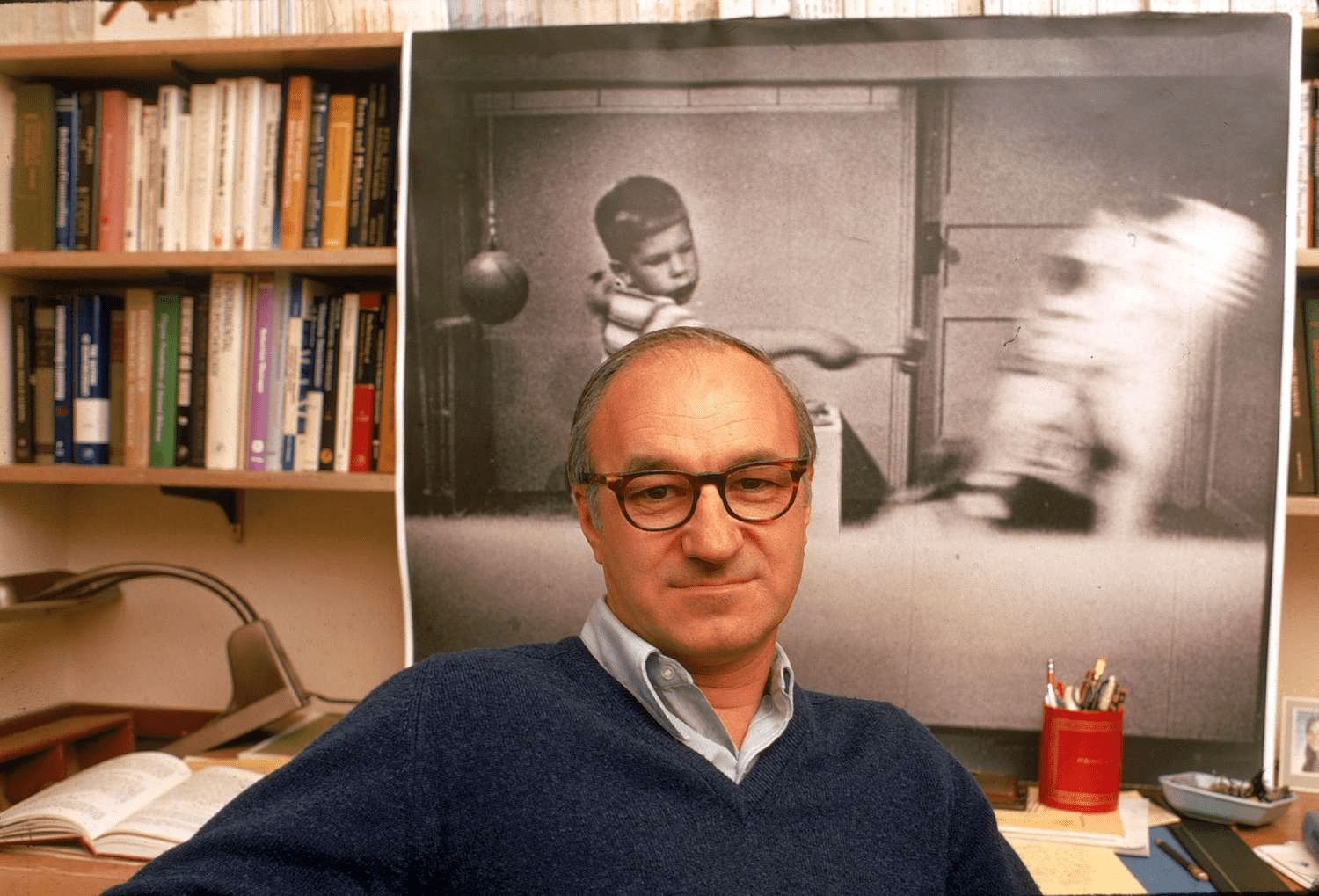
In 1953, Bandura began teaching at Stanford University. As he researched the mechanisms underlying adolescent aggression, he became more intrigued by vicarious learning, modeling, and imitation, developing social learning theory based on three core concepts: observation, modeling, and imitation.
His most famous experiment, conducted in 1961, was the Bobo doll study. Bandura filmed a short clip in which two adults struck an inflatable doll with toy mallets, displaying aggressive behavior.
He then showed this 10-minute film to a group of children, after which the kids were taken to a room full of toys but were not allowed to touch them. Next, the now-upset children were moved to a room containing the Bobo doll, a mallet, and ropes. They played there for 20 minutes while the experimenter observed them through a one-way mirror, tracking each child’s level of aggression. Ultimately, it became clear that most children also attacked the doll, mimicking the adult words and actions shown in the video.
This study turned out to be significant because it demonstrated that children imitate the behavior and words of adults. Bandura dubbed the process social learning theory. He concluded that the grown-ups’ aggressive actions toward the doll led the children to perceive these behaviors as acceptable. As a result, they adopted a model of responding with aggression to frustration.
Bandura developed his social cognitive theory from an integrated understanding of human cognition shaped by social awareness and influence. He emphasized that behavior is determined by a combination of drives, cues, responses, and rewards. For instance, a child wants to eat candy, and that desire is reinforced if parents react by eating candy with them or praising them for doing so.
Bandura argued that moral behavior is a product of self-regulation but must be activated in a social context. He also formulated self-efficacy theory—self-efficacy being the belief in one’s own abilities. Bandura found that people who believed they could overcome their phobias actually succeeded. Many psychology textbooks label Bandura’s theories as “behaviorist,” but he maintained he never adhered to behaviorist orthodoxy.
Throughout his career, Bandura authored numerous books and journal articles. Many of his well-known publications remain psychology classics. His first professional paper, “Primary and Secondary Suggestibility,” appeared in 1953. In 1973, he published A Social Learning Analysis, covering sources of aggression. Social Learning Theory came out in 1977, outlining the fundamentals of his ideas on how humans learn through observation and modeling. His article “Toward a Unifying Theory of Behavioral Change,” in Psychological Review, has become a classic still referenced today.
Bandura’s Contributions to Psychology
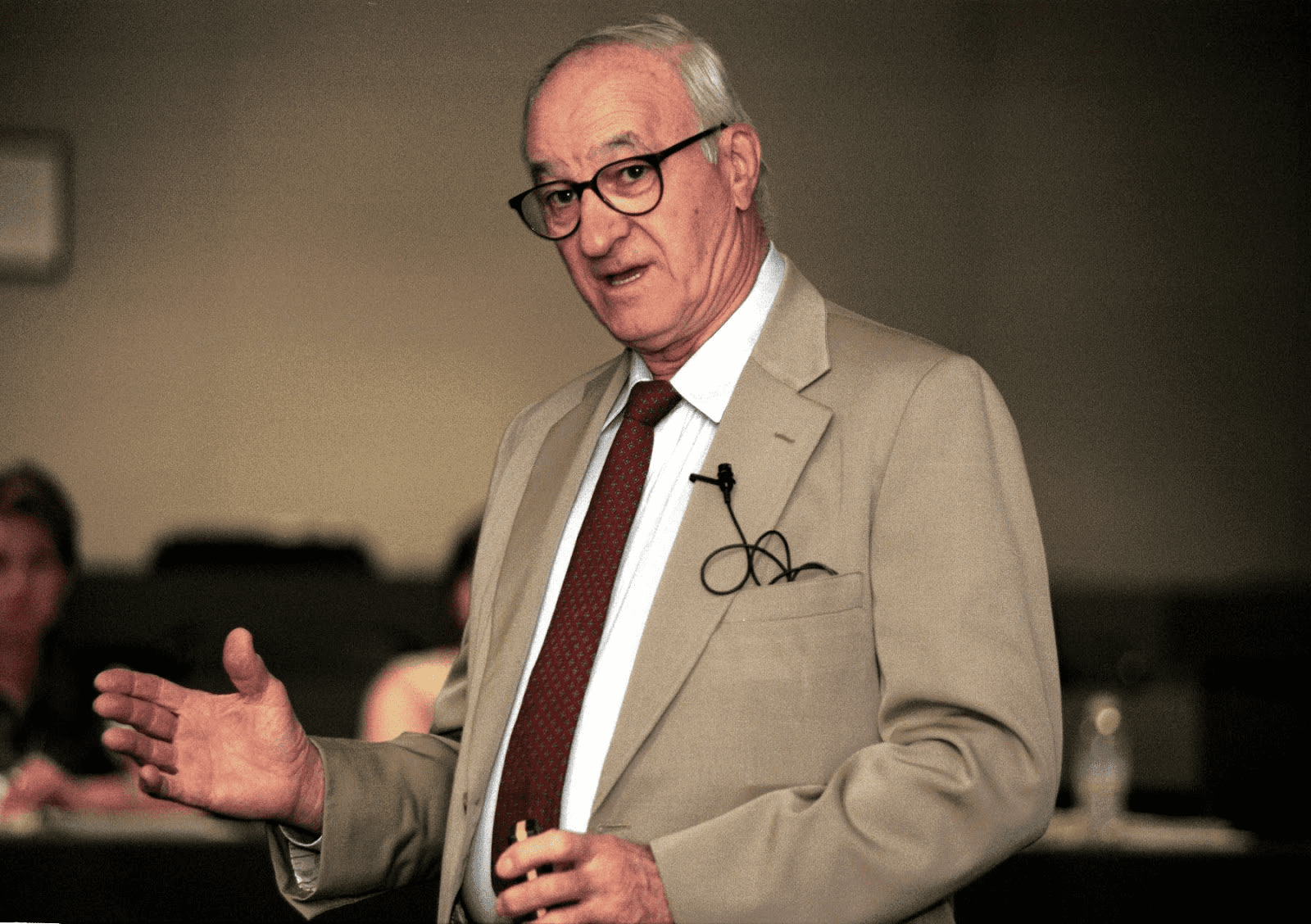
The works of this remarkable figure are credited as part of the cognitive revolution in psychology, taking place in the early 1960s. His theories greatly influenced personality psychology, education, and psychotherapy, ultimately helping thousands of children and adults.
In 1974, Bandura was elected president of the American Psychological Association. In 1980, he was recognized for his outstanding scientific contributions. In 2014, former U.S. President Barack Obama awarded Albert the National Medal of Science.
On July 26, 2021, Albert Bandura passed away at age 95 from acute heart failure.