

Alison Jane Sydor is regarded as one of Canada’s greatest cyclists. She has claimed 17 World Cup medals in cross-country, and of the 13 medals she holds, 3 are gold. Hard work, resilience, and faith in herself propelled her to tremendous athletic success. Learn more about how she reached the top and earned worldwide recognition, courtesy of edmontonka.com.
Childhood and Youth
Alison was born in Edmonton. Her father worked in the mining industry, forcing the family to move from one prairie region to another. From a young age, she showed a keen interest in bicycles; at just two years old, she learned to ride a two-wheeler. After receiving her high school diploma, Sydor enrolled at the University of Victoria, graduating in 1989 with a Bachelor of Science in Biochemistry.
Career Beginnings and Growth
Alison took up cycling at age 20 while training for a triathlon. She started with road racing and quickly rose to prominence. In 1987, at the Western Canada Games, she took gold medals in all three cycling disciplines (mountain biking, road racing, and cyclocross). By year’s end, she had earned silver at the Canadian Road Racing National Championships and joined Canada’s national team. Over her career, Sydor won the national road title four times.
In 1991, Alison became the first Canadian woman to medal in individual international road racing, securing third place at the UCI Road World Championships in Stuttgart. That same year, she made her international debut in mountain biking, finishing fourth at a World Cup round in Mont-Sainte-Anne. On just her second outing—a UCI cross-country World Cup race in Château-d’Œx, Switzerland—she finished first.
In 1992, Sydor was third globally in road racing. She took part in the 1992 Summer Olympics in Barcelona, finishing 12th in the women’s individual road race. Her last major competition occurred at the 1994 Commonwealth Games, splitting silver in the team time trial and winning bronze in the road race.
Major Achievements

A world-championship victory marked a major milestone for the athlete, boosting her self-confidence. Prior to that, she had doubted whether she had the talent and skill for top-level mountain biking. She proceeded to secure gold at three consecutive world championships (1994, 1995, 1996). In 2002, Alison added a shared team-relay title at the World Championships.
One of her bravest feats came during a World Cup race in Plymouth, England. Toward the end, she was fighting the flu and feeling unwell when her chain came off mid-race. Without hesitation, she hoisted the bike onto her shoulder and ran to the finish. Despite everything, Sydor claimed the bronze medal. According to the rules, if a racer is injured or experiences a mechanical problem in the closing meters, they can still finish by crossing the line with the bike.
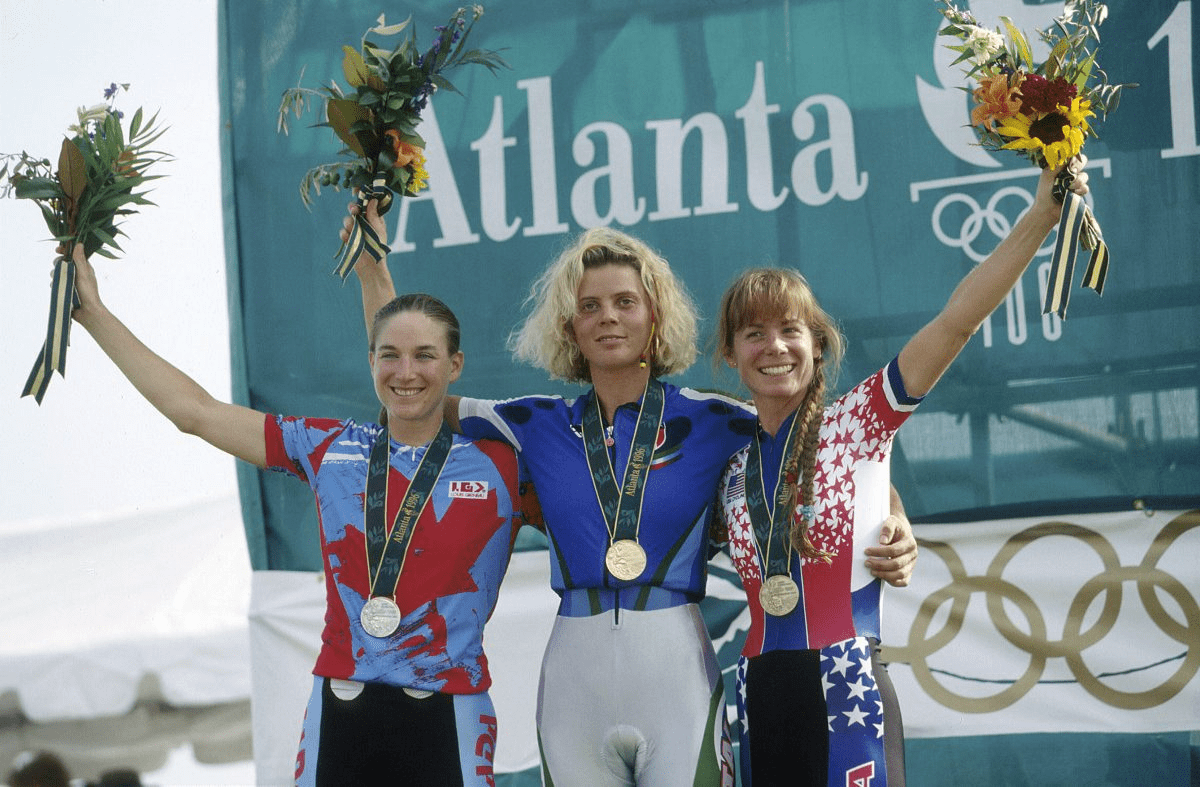
Sydor claimed a silver medal in the first women’s cross-country mountain bike race at the 1996 Summer Olympics in Atlanta, covering 32 km in 1:52:36. In total, she competed in four Olympic Games and many multi-stage marathon races throughout Europe. In 2008, Alison took first at the Absa Cape Epic, and in 2010, she retired from the sport.
During her career, Sydor received numerous accolades and titles. In 1999, Canadian Cyclist named her one of Canada’s best cyclists of the century, recognizing her with the Order of British Columbia. In 2013, Sydor was inducted into Canada’s Sports Hall of Fame. Her extraordinary success stemmed from her endurance, patience, and dedication.