

When education first began in Alberta, women were not allowed to study. To fight for their rights, they had to overcome a long and difficult journey.
An excellent example of this struggle is the establishment of women’s fraternities. These organizations became spaces where women supported one another. Learn more about the beginnings of women’s education and its development in this article on edmontonka.com.
Women as Students
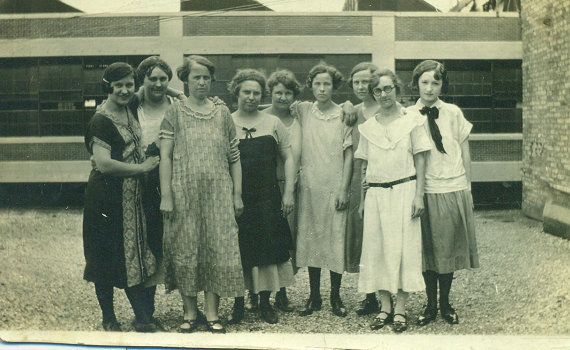
In 1908, Alberta Premier Alexander Rutherford’s dream became a reality with the founding of the University of Alberta in Strathcona. Rutherford envisioned a non-denominational university with co-education, a progressive idea for the early 20th century.
At the time, older universities like McGill had begun allowing women to attend classes, but they segregated them from men. Additionally, negative stereotypes about women’s education remained pervasive, including beliefs that it could make women physically ill or mentally unstable. Nevertheless, Rutherford firmly insisted on co-education from the outset and succeeded in implementing it.
The first class at the University of Alberta included 40 students, eight of whom were women. Among them were Ethel Anderson, who would later lead the university’s women’s athletics program, and Decima Robinson, the first female graduate with a bachelor’s degree. Despite the push for co-education, these women understood that achieving true equality would be a challenging path.
Forming a Women’s Front
To stand together and support one another, the women formed an organization that became the precursor to women’s fraternities at the University of Alberta—SIS.
SIS stood for “Seven Independent Sisters.” The group humorously addressed the negative perceptions of women’s education while taking pride in their academic achievements.
SIS was later renamed the Wauneita Club, where all female students were automatically members. The club closely resembled the male fraternities of the time, adopting similar traditions, such as rolling new members down stairs in barrels, alongside other club rituals. In 1929, the club was integrated into the Students’ Union while retaining its autonomy, and its name changed to the Wauneita Society.
The society’s name derived from a Cree word meaning “kind-heartedness.” The members embraced various traditions and terms from the Cree people, organizing ceremonial events themed around Indigenous cultures.
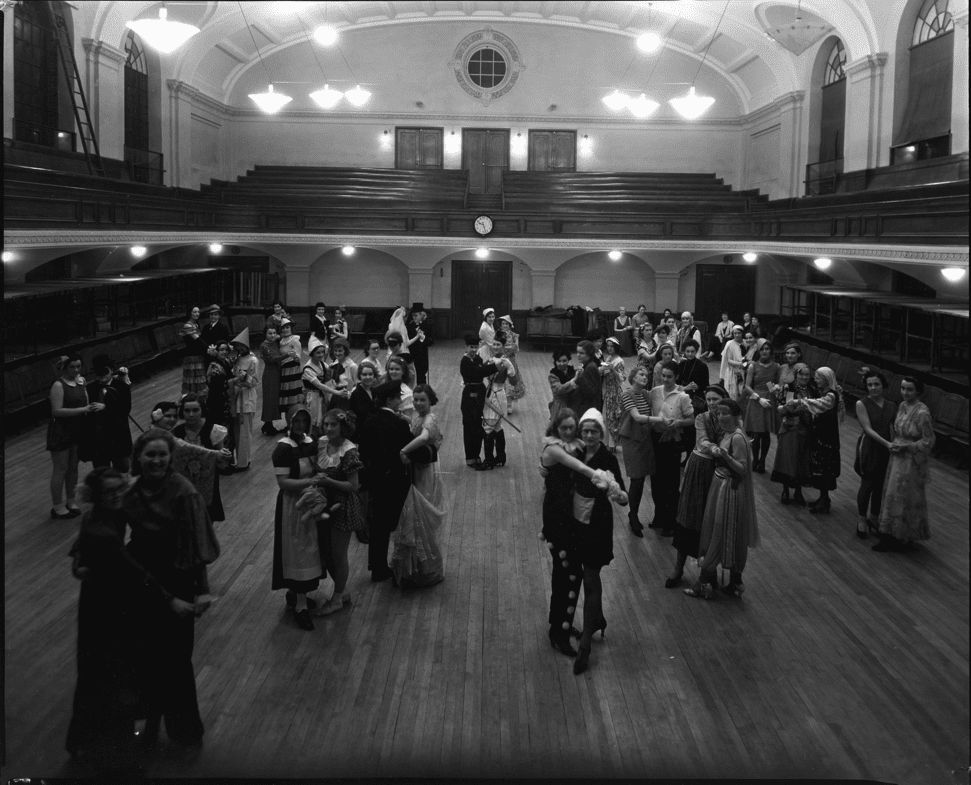
Activities During World War I
The Wauneita Society played an active role during World War I, hosting debates, social gatherings, and musical events to raise funds for the war effort. Members worked diligently with organizations like the Red Cross and the Soldiers’ Comfort Club, attending meetings and sewing goods for shipment overseas. Such activities were typical of newly formed women’s organizations at the time.
Growth and Peak Years
Throughout the early 20th century, the Wauneita Society thrived. By the 1950s and 1960s, they had their own dedicated space, Wauneita Hall, located in the Students’ Union Building (now University Hall). This space provided women with a retreat for relaxation and focused study, free from distractions. The hall was elegantly furnished with wooden panels and featured a roaring fireplace.
The Society’s Decline
By the 1960s, Wauneita Hall was disbanded, symbolizing the society’s decline. While the group undertook progressive initiatives, such as distributing brochures about birth control to first-year students, societal attitudes of the time remained resistant to rapid change. By 1973, the Wauneita Society, a place where women had found support and camaraderie, officially ceased operations.