

Edmonton has seen many notable families who have greatly contributed to the city and Canada as a whole. One such family is the Prins family, who helped countless Dutch settlers build new lives in Alberta. More on edmontonka.com.
How It All Began
Jacob Prins was born on May 20, 1886, in Andijk, North Holland, into a poor farming family. From an early age, he was involved in his parents’ farm. As he grew up, he married a Dutch woman, Aafje, and the couple had eight children.
The Prins family was known for their hard work and love of gardening, cultivating potatoes, garden seeds, and tulips. They established a successful business in Holland, which provided a comfortable livelihood.
However, their small community became “too tight” for the family, and they decided to emigrate to Edmonton. The parents believed their eight children would find greater opportunities in Canada. Leaving their hometown of Andijk, the Prins family arrived in Edmonton on March 7, 1927. Initially, they stayed at a Christian Reformed Church on 105 Avenue and 93 Street, but space was limited, prompting Jacob to search for a new property.
After careful consideration, Jacob purchased the 186-acre Humberstone farm, located in a wide bend of the North Saskatchewan River and atop the Humberstone coal mine. Jacob specifically chose this property because it included mineral rights, fertile land, and a large two-story house built by the previous owner, William Humberstone, for miners.
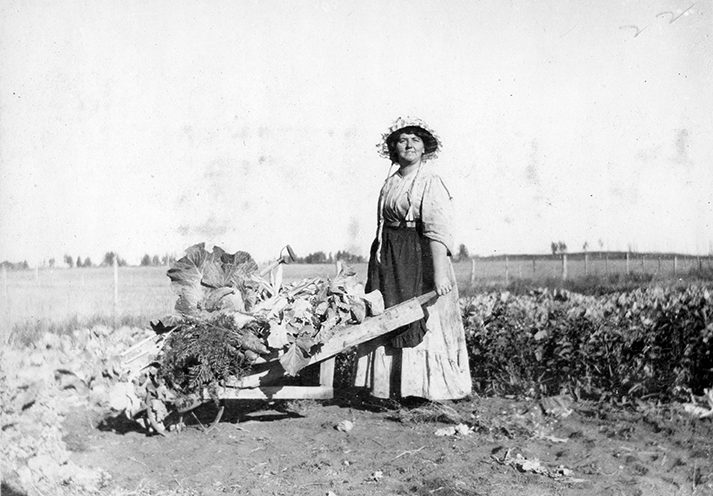
The family used water from the North Saskatchewan River to irrigate their fields, growing potatoes, various vegetables, and even cauliflower—the first of its kind in Alberta. When market prices dropped, they supplemented their income by collecting royalties from coal mining on their land. Living above abandoned mines was hazardous, and on several occasions, livestock perished when the ground collapsed into old mine shafts.
Business Growth and Encouraging Others
Jacob was thrilled with how interesting and profitable their business had become in Canada. Inspired by this success, he began encouraging other Dutch families to emigrate. When three families arrived from the Netherlands in 1936, he found them nearby farms to live and work on. This marked the start of a flourishing career.
Jacob often turned to the Canadian National Railway for information about available farmland. By the winter of 1937, the railway sent him to the Netherlands to promote emigration to Western Canada.
After World War II, the Synodical Committee of the Christian Reformed Church appointed Jacob as a fieldman in Central British Columbia. The railway provided him with a free pass to travel across the West in search of settlement locations. Eventually, Jacob discovered the Bulkley Valley in northern Central British Columbia, ideally situated near the railway. Here, settlers engaged in forestry during the winter. Many Dutch families later settled in the Terrace and Smithers communities.
After World War II, emigration under Jacob’s guidance ceased, allowing him to devote more time to his farm. The family continued to assist new arrivals, providing advice and directing them to their destinations. Travelers often visited the Prins family for meals and rest after long journeys. Aafje, a skilled homemaker, ensured food and lodging for the hungry travelers.
In 1949, tragedy struck the family when Aafje passed away. Her role as cook for the workers was taken over by her daughter-in-law, Ann Prins, who rose before dawn to prepare meals.
The Prins family’s efforts were driven by kindness, not profit. Thanks to their dedication, over 800 Dutch families found homes in Canada, with most settling in the Beverly area.
The Decline of Coal Mining and Jacob Prins Park
In 1950, the family attempted coal mining on their own. However, with the rapid growth of the oil industry and declining demand for coal, the venture proved unprofitable.
In 1963, Jacob Prins, the family patriarch, passed away. People from across Alberta and British Columbia gathered to pay their respects. The house and farm were passed down to his sons, but vegetable production ceased. In 1969, the family home, which had housed two generations of the Prins family, was demolished.
In 1983, Edmonton’s city council named a park at 121 Avenue and 53 Street “Jacob Prins Park” in recognition of his contributions to the area.