

Café · Edmonton · ⭐ 9.1/10 · 1474 reviews · updated: 2026-08-10 17:37:13
Address: 10004 90 St NW, Edmonton, AB T5H 4P4, Canada
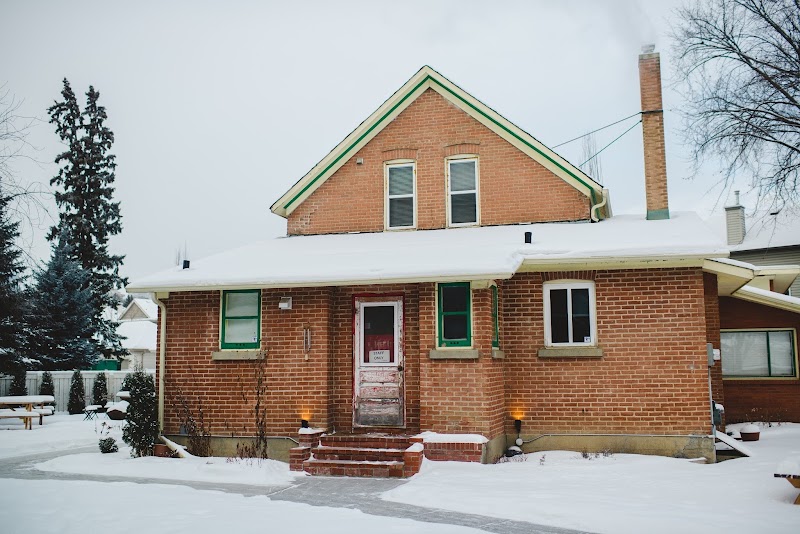
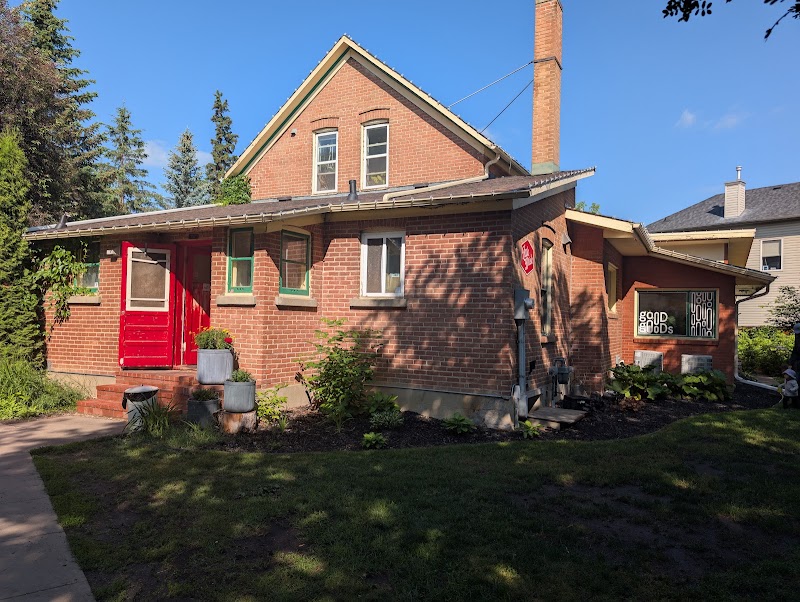
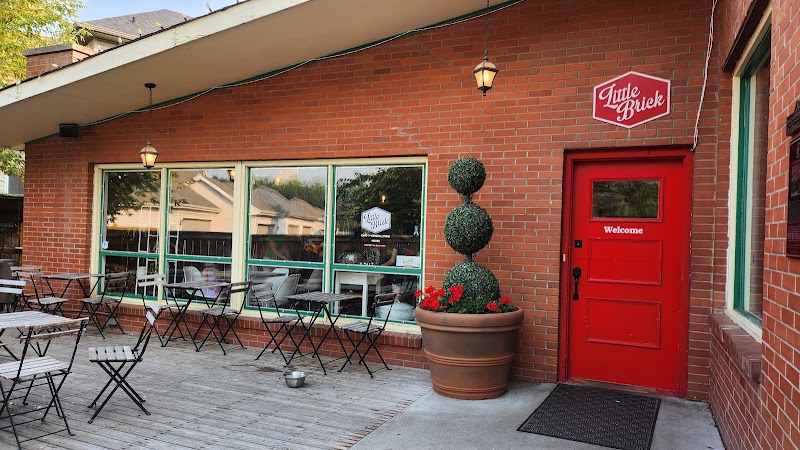
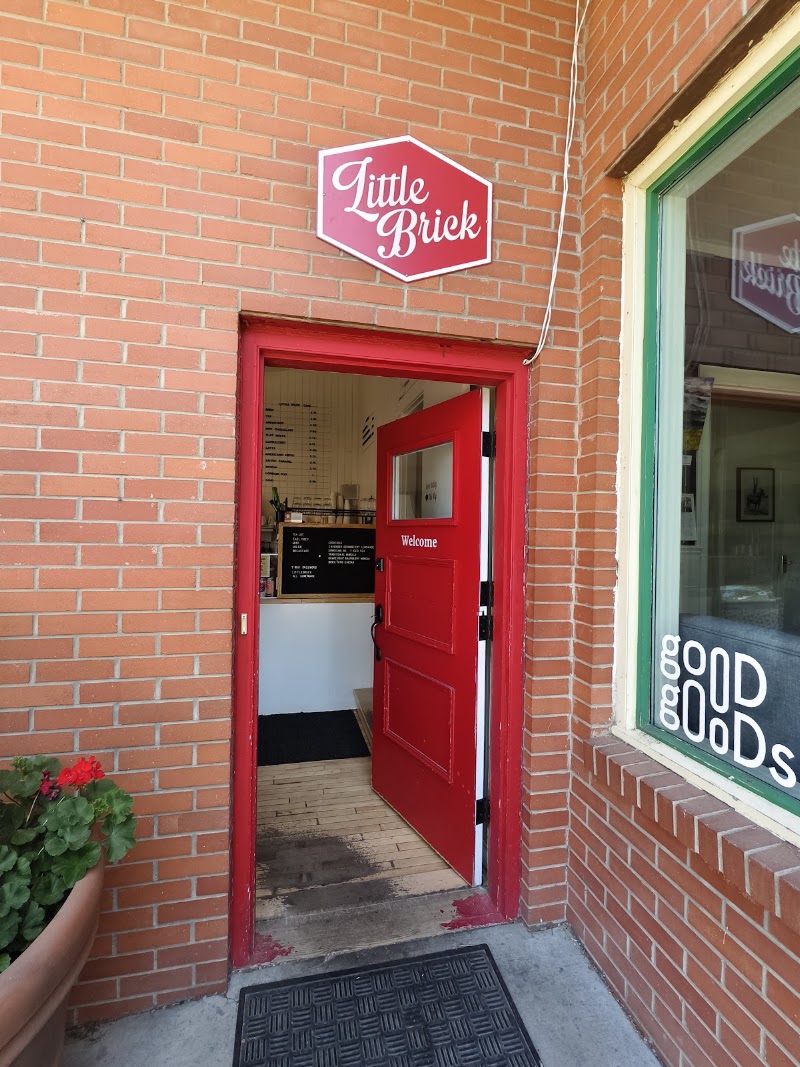
Most cafés borrow their character from a fit-out. Little Brick inherited its own. The café occupies a brick house from 1903 that belonged to J.B. Little, the brickyard man whose kilns supplied the material for a great deal of early Edmonton and whose workers settled the valley neighbourhood around him. Riverdale still looks like the place those workers built: low houses, big trees, the river a short walk away, downtown visible above the escarpment and yet somehow a world away. Walk through the red door and the house is still a house — small rooms, domestic proportions, a counter where a family’s kitchen logic used to be.
Highlights
- A genuine 1903 heritage house, restored rather than gutted, named for the brickmaker who lived in it — the rare café where the building is the story and not the decor budget.
- A backyard built for staying: an oversized deck, long picnic tables on grass, tall fences for privacy and firepits that keep the yard usable well past the end of the Edmonton patio season.
- Dogs welcome outside, which combined with the river valley trails at the bottom of the hill makes this the default stop on a valley walk.
- A general store in the front rooms stocked with regional makers — housewares, body products, cooking ingredients — so a coffee run can become a gift run.
- Part of the Nate Box family of cafés, alongside District Coffee Co. and Burrow, one of the most influential small groups in the city’s coffee history.
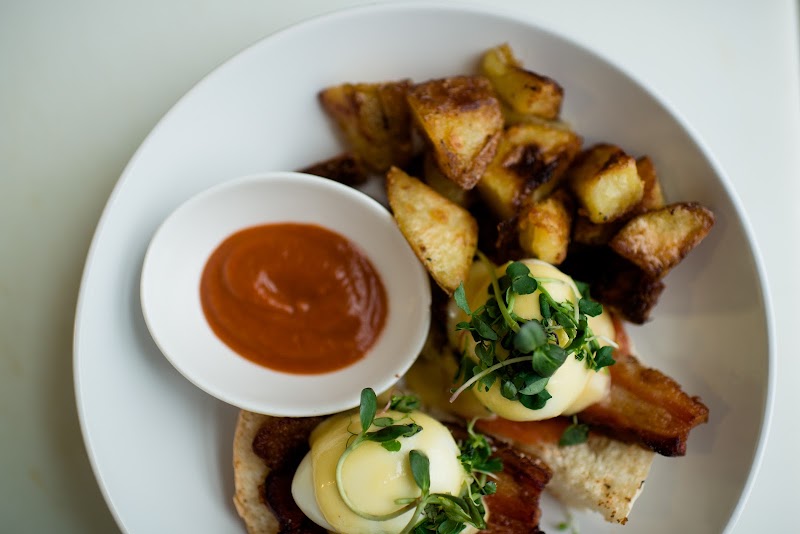
- Proper brunch, not just pastry — breakfast sandwiches, burritos, soups and salads made in house, which is why the room fills with people who came to eat rather than to grab.
What’s in the cup
Little Brick does not roast. It buys, and historically it has bought from more than one roastery at a time — a rotating, multi-roaster approach that lets the counter change what is in the hopper without changing what the café is. In the years when Edmonton’s specialty scene was being written up nationally, the guest list here included De La Paz, the boutique label out of the San Francisco roastery Four Barrel, which tells you the ambition: this was never a house that treated coffee as a side product of brunch. The café’s own description now points closer to home, with beans roasted in Alberta and a line about having spent years sourcing.
Both of those things can be true, and the honest summary for a visitor is this: the bean you get depends on when you come, and the useful move is to ask what is on today rather than to arrive with expectations. Espresso and milk drinks are the volume business, as they are in any brunch room; pour-over is served for anyone who wants the origin tasted rather than softened, and it is the order that tells you whether the current roaster is any good.
The contrast with the rest of the city is worth naming. Edmonton’s coffee identity is built on roaster-owned bars — Transcend, Ace, Iconoclast, Rogue Wave — where the café exists to show what the roastery did that week. Little Brick works the other way round: it is a café first, curating other people’s roasting, and it answers to the room rather than to a production schedule. If you like tasting across roasteries without leaving your neighbourhood, that model is a feature rather than a compromise.
Who’s behind it
The café belongs to the group built by Nate Box, a name that carries real weight in Edmonton hospitality. He started with Elm Café, a tiny downtown counter that became the reference point for the city’s independent coffee culture, and expanded into District Coffee Co. and Burrow — the latter installed inside a downtown LRT station, which is one of the more Edmonton solutions to the problem of winter ever executed: put the café where people already are, underground, in the warm.
Little Brick was the group’s move out of the office core and into a neighbourhood, and the choice of building was not incidental. Restoring the J.B. Little house meant taking on a heritage structure with all the constraints that implies, in a valley neighbourhood with no passing trade to speak of, and betting that people would come down the hill on purpose. The bet worked. What the group has always understood, visible in every one of its sites, is that a café is a piece of civic infrastructure rather than a retail unit, and that people will travel for a room that makes them feel like locals.
Which visit it suits
This is a weekend room and a social one. The best version of Little Brick is a late morning with two or three people, food ordered properly, the yard if the weather allows and the front room if it does not, and no particular plan for the next two hours. It is also, unusually for a café, a legitimate destination for a family — the yard absorbs children in a way that a narrow espresso bar never can.
For laptop work the picture is mixed and you should go in with your eyes open. The building is a house: rooms are small, tables are shared by proximity whether or not you intended to share, and at peak the noise is conversational rather than ambient. The café publishes nothing about Wi-Fi or power outlets, and a heritage house is not a building with sockets under every table. A quiet weekday morning is a plausible working session; a Saturday is not, and treating it as one is the single most common way to have a bad time here.
For takeaway it works very well, particularly if you are on the trails: the valley path network runs below the neighbourhood, and a coffee and a breakfast sandwich carried out to a bench is arguably the purest use of the place. And for coming alone with a book, the yard on a weekday is one of the better hours the city offers.
Space and atmosphere
Indoors the café keeps the logic of a home: a series of smaller rooms rather than one open floor, wooden warmth, daylight through original window openings, and the general store woven through the space so that shelves of local goods sit where a family’s furniture once did. It is intimate by construction, which is charming when it is half full and tight when it is not. Capacity is limited, and on busy mornings you may be waiting for a table.
Outside is where the café doubles in size. The lot is enclosed by tall fences, with an oversized deck, big communal picnic tables and grass — a proper yard rather than a strip of pavement with chairs on it. The firepits matter more than they sound: in a city where the outdoor season is genuinely short, a fire on the lawn extends the useful life of that yard into the shoulder months and turns an autumn evening into something people plan around. Dogs are welcome in the yard, and on a warm weekend half the tables have one under them.
What comes with the coffee
The kitchen is real, and that separates this from most cafés in the city. The café states its position plainly — that food should be healthy, locally sourced and made in house — and it backs that with a brunch offering rather than a pastry case: breakfast sandwiches, burritos, soups, salads, and baking that comes out of the same kitchen rather than off a delivery truck. You can eat a meal here, not merely something sweet beside a flat white.
The general store is the other half of the proposition, and it is not a token shelf of branded mugs. It stocks regional makers across housewares, body products and cooking ingredients, which means the building does two jobs: coffee and food at the back, a small curated shop at the front. Plenty of people leave with a bag as well as a cup.
When to come
Weekends are the café at full volume — busy, loud, tables turning, the yard full when the weather is kind. That is the version most people mean when they recommend it, and it is worth seeing, but expect to wait. Weekday mornings are the opposite and, for many purposes, better: the same house, the same kitchen, a fraction of the people.
The seasonal swing here is bigger than at a downtown café. From late spring to early autumn the yard is the main event and the indoor rooms are overflow; in deep winter the equation reverses and the café becomes a small, warm heritage house with a fire outside for the determined. Neither version is a lesser one, but they are genuinely different visits, and planning for the wrong one is easy.
Getting there
Riverdale sits in the North Saskatchewan river valley directly below downtown, which produces the neighbourhood’s defining fact: it is close to the city centre in a straight line and separated from it by a serious hill. Walking down from the core takes very little effort and walking back up takes noticeably more, especially with ice underfoot — this is not part of the downtown pedway network, and no covered route will get you here.
By bike it is one of the easiest good decisions in Edmonton, because the river valley trail system runs right below the neighbourhood and the café sits a short climb off it. By car, parking is residential and quiet outside peak weekend hours. There is no LRT station in the valley itself, so transit means a bus and a short walk down. The upside of all this awkwardness is exactly what makes the place feel the way it does: nobody arrives at Little Brick by accident.
Good to know
- It is small indoors. A heritage house has heritage-house capacity — on a weekend, expect a queue or a wait for a table.
- The yard is the reason to time your visit. Fine weather changes the café entirely, and the firepits stretch that window later into the year than you would expect.
- Dogs outside only, which is the normal arrangement and works because the yard is the better seat anyway.
- Ask which roaster is on. The house has run a rotating, curated approach rather than a single fixed supplier, so the answer changes.
- Wi-Fi and power are not documented, and the building’s age makes outlet-hunting a real risk. Do not plan a deadline around it.
- Come hungry. Treating this as a coffee-only stop wastes the kitchen, which is the part that separates it from the competition.
Questions and answers
What is the building?
A brick house from 1903 that belonged to J.B. Little, whose brickyard fired its first kiln in the 1890s and employed hundreds of Edmontonians, many of whom settled in the surrounding valley neighbourhood. The house was restored and reopened as a café and general store.
Who runs it?
It is part of the group founded by Nate Box, which also includes District Coffee Co. and Burrow, and which began with the influential downtown counter Elm Café.
Do they roast their own coffee?
No. The café curates beans from other roasteries and has run a rotating approach rather than a single fixed supplier, with its own description pointing at Alberta roasting. Ask at the counter what is on that day.
Is the food serious or is it just pastry?
Serious. There is a working kitchen doing brunch — breakfast sandwiches, burritos, soups and salads — alongside baking made on site.
Can I sit outside?
Yes, and you should when you can. The backyard has a large deck, communal picnic tables on grass, tall fences and firepits, which make it usable well beyond the short local patio season.
Are dogs allowed?
In the yard, yes — and given the river valley trails below the neighbourhood, a lot of visitors arrive with one.
Is it a good laptop café?
Only at quiet times, and with no guarantees. The rooms are small, weekends are loud, and neither Wi-Fi nor power outlets are documented publicly. A weekday morning is the plausible window.
How do I get there from downtown?
On foot or by bike, down into the river valley — it is close in distance and separated by a hill, with no covered or underground route from the core. The valley trail network passes just below the neighbourhood.
Is there anything to do besides drink coffee?
Yes — the general store at the front carries regional housewares, body products and cooking ingredients, and the river valley trail system is a few minutes downhill.
Opening hours
| Day | Hours |
|---|---|
| Monday | 08:00–14:00 |
| Tuesday | 08:00–14:00 |
| Wednesday | 08:00–14:00 |
| Thursday | 08:00–14:00 |
| Friday | 08:00–14:00 |
| Saturday | 08:00–14:00 |
| Sunday | 08:00–14:00 |
Photos
Visitor reviews
Reviews last updated: 2026-08-10 17:37:13
Data is refreshed monthly. Sources: edmontonka.com and editorial picks based on reviews.
«Літл Брік» – це чарівне місце з теплою та розслаблюючою атмосферою. Кава була свіжою, насиченою та ідеально приготовленою, а їжа була такою ж вражаючою. Все мало домашній смак та було насиченим ароматом. Персонал був пр…
Затишно, чарівно, старомодно, чисто, привітний персонал, не кажучи вже про їжу та карамельний лате, які були ідеальними. Багато столів для пікніка, стільці Adirondack, стільниці, місця для сидіння в приміщенні. Жодного д…
НАЙМИЛІША маленька прихована перлина в Едмонтоні! Я сьогодні взяла сюди свою 3-річну доньку на обід, і, вау, я була просто вражена. Затишно розташоване в житловому районі Рівердейл з великою кількістю місць для паркуванн…
Ми завітали сюди випадково, коли були в цьому районі на Muttart, було багатолюдно, і не без підстав. Їжа була неймовірно смачною. Смачна, порції правильного розміру та унікальні. Обов'язково повернуся. Сподобалася історі…
My wife and I stopped here for our ongoing non-coffee adventures. It’s a neat place for sure. Located in the downtown area, near the old brickyard (I gather), Little Brick Is in a red brick house built in 1903. It was ow…