

Edmonton is famous for its cold and harsh winters. For centuries, locals have looked for ways to stay warm while remaining stylish from October through April – and they’ve always found creative solutions. In this article, we’ll look at how winter fashion has evolved in the city and across the region. More at edmontonka.com.
Beginnings
When Europeans arrived in what is now Edmonton, they were unprepared for the local climate. Moreover, in the 1880s, there was little to buy in Edmonton. Much of the local clothing was hand-sewn from the wool of local sheep – extremely warm, thanks to its natural insulation. Before long, Europeans began purchasing and wearing clothing produced in the area.
They also adopted the “moccasins” worn by Indigenous peoples, which offered far more protection from the cold than European footwear of that time. In turn, Indigenous groups learned a great deal from Europeans – about woven fibers, cotton, and European clothing design. This cultural exchange at every level allowed Alberta residents to improve their quality of life.
By 1846, a Métis winter outfit included wool undergarments, a cotton shirt, warm wool pants and socks, plus an outer garment cut from heavy wool. Locals often wore moccasins and gloves made of deer hide.
For centuries, wool and fur formed the core of winter fashion—even as other warm fabrics became available. In the 20th century, fur became a status symbol. In 1905, a beaver coat in Edmonton cost $15 (around $405 today). At the start of the 20th century, Edmonton emerged as a true Canadian fur hub. By 1920, the city was shipping $4 million of raw fur. Fur remained popular into the 1980s, until activists began opposing fur farming.
Winter Fashion in the 20th Century
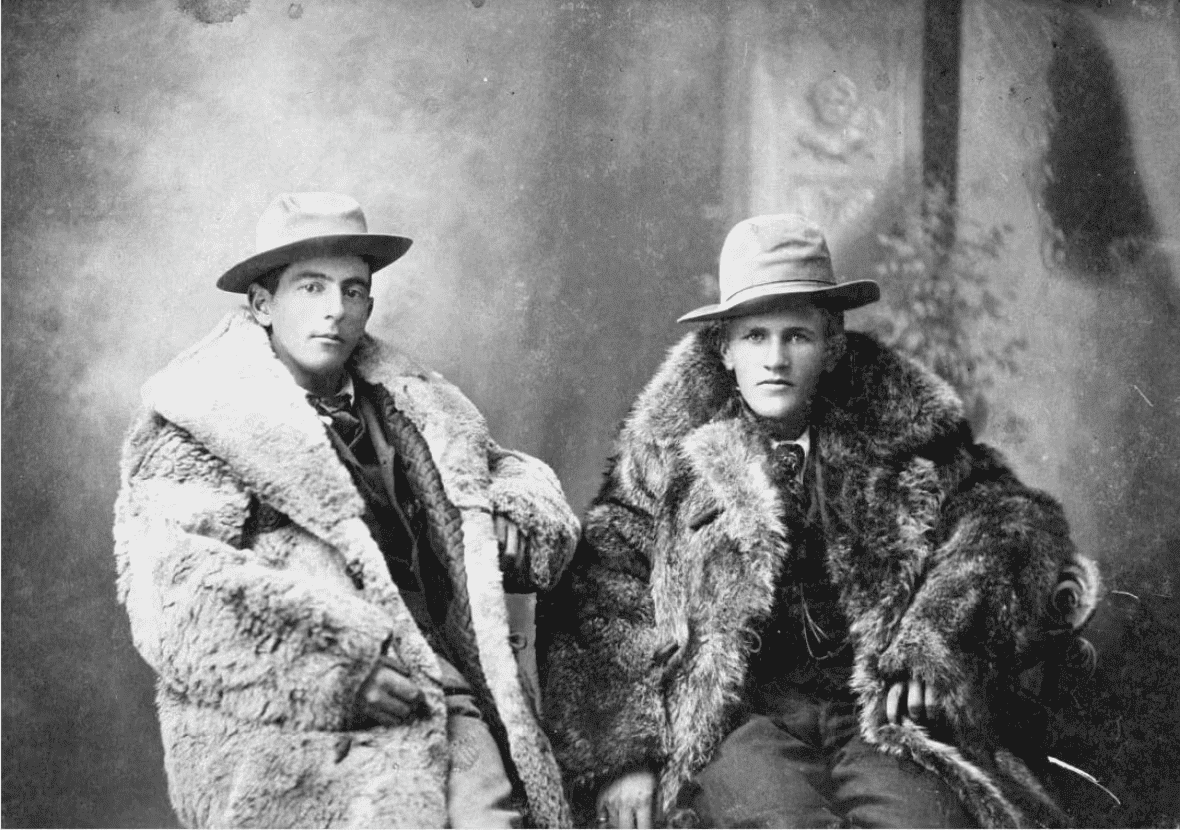
In the early 1900s, women wore wool stockings and hosiery to keep warm—uncomfortable and prone to skin irritation. Men and women alike dressed in about three layers to stay cozy. Men typically wore breeches, shirts, and wool stockings, while women added corsets, dresses, and petticoats on top of their stockings and socks. Until the 1950s, even bathing suits were made of wool.
In the 1940s, people still wore wool. It became increasingly common for women to wear pants around this time—a response to the rationing of materials, shorter coats, and a lack of silk stockings.
Mid-20th century outerwear was usually designed to be fastened with buttons, clasps, or toggles. Though zippers existed, they frequently broke and were mostly reserved for workwear or children’s clothing. In addition, it was considered improper for Alberta women to wear clothing with zippers back then, since they could undress “too quickly.”
Winter accessories, meanwhile, were essential for staying warm. Hats, scarves, and toques came in many styles and often looked very fashionable.
Boots were typically made of leather, with rubber soles treated with specialized oils for waterproofing. This treatment also helped reduce slippage on icy surfaces.
Hence, for a long time in Edmonton and Alberta, winter clothing has balanced practicality with style. European elements have blended with Indigenous fashions, while fur has for centuries played a significant role in many people’s wardrobes—though over time, more and more choose eco-friendly fur. It’s fascinating to see how Edmonton’s winter style will continue to evolve.